
If you have ever pulled up to the seawall in early June and seen a wide brown ribbon of sargassum stretched across the sand, you know the feeling. The Gulf is right there, the sun is out, the cooler is packed, and suddenly your beach day looks like a compost pile. The good news is Galveston seaweed season is completely workable once you know how it moves, which beaches the Park Board actively grooms, and which stretches of the island stay clearer on any given day.
At BeachBox, we have hosted more than 50,000 happy stays across the Texas Gulf Coast, which means our team has walked these beaches in every kind of sargassum year. This local guide walks you through the seasonal timing, the beaches to prioritize, the tools locals use to check conditions before they leave the driveway, and the rental strategies that keep your vacation on track even when the Gulf is dropping mats of golden weed.
When Is Galveston Seaweed Season?
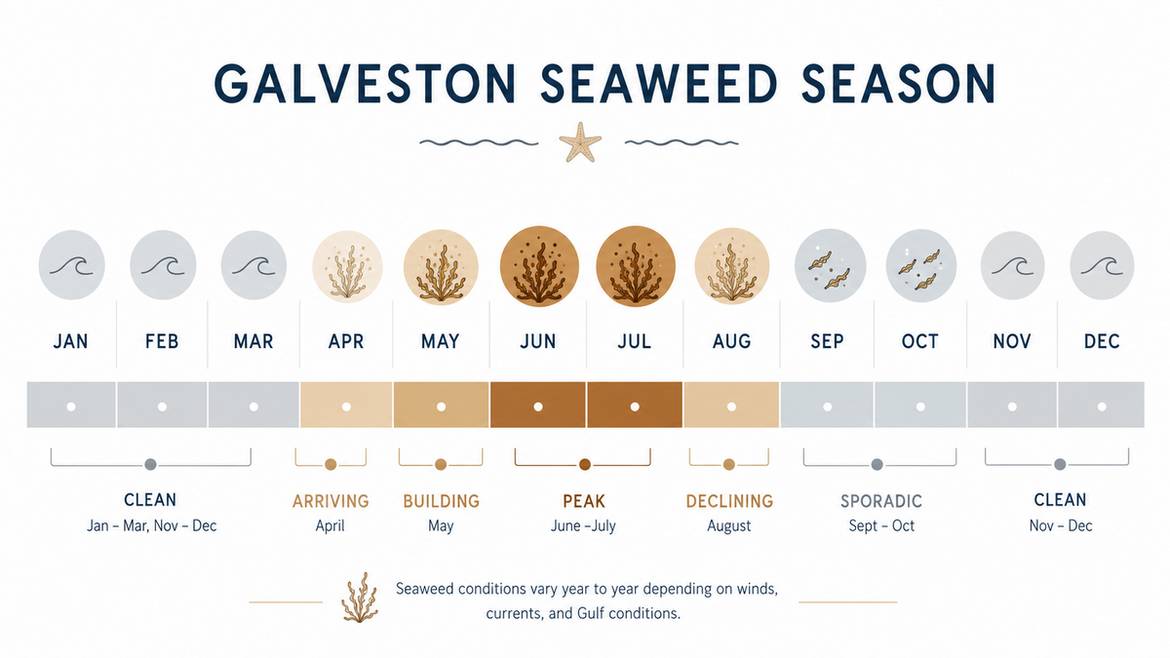
Sargassum on Galveston Island is a spring and summer story. Beach cast is typically minimal in winter, begins to appear in April, builds through May, peaks in June and early July, then tapers off through August and becomes sporadic again by September and October.
Multiple studies from Texas A&M and the University of Houston confirm that Sargassum fluitans and Sargassum natans wash up on Galveston beaches each year from May to August, with June and July showing the most consistent buildup in beach elevation from accumulated mats. On the west end, quantitative beach profiles show elevation returning to normal by August and September as the seaweed decomposes or washes back out with the tides.
Here is the general month-by-month pattern locals plan around:
- January to March: Minimal to no sargassum. Clean sand, cool water, quiet beaches.
- April: First arrivals begin, often light and scattered. Some years produce an early peak.
- May: Volume builds noticeably. Memorial Day weekend can be hit or miss.
- June and early July: Peak season. Expect the heaviest and most persistent piles.
- Late July into August: Landings continue but often start to thin.
- September and October: Sporadic arrivals. Water clears and beaches groom easily.
- November and December: Effectively seaweed-free.
The peak overlaps directly with the high tourism season, which is why the Galveston Island Park Board runs a nightly seaweed management program from roughly May through August.
Why Galveston Beaches Get Seaweed in the First Place
Sargassum is a floating brown macroalgae that lives its entire life at the surface of the open ocean. Massive rafts drift across the Atlantic and Caribbean before being pushed into the Gulf of Mexico by wind and current. Oceanographer Chuanmin Hu has also documented a local northwest Gulf sargassum source that tends to peak along Texas beaches in April and May, which is why some years produce a big early landing before the larger Atlantic belt even shows up.
Two things are important for setting expectations before you visit:
- It is not a health hazard. The Galveston Island Park Board and local officials are clear that sargassum is a nuisance, not a danger. It can smell as it breaks down and it is inconvenient to walk through, but it is safe to be around.
- The city usually pushes it, not removes it. County rules only require removal when a band is at least 8 feet wide and 6 inches high perpendicular to the shoreline. Below that threshold, crews typically push the sargassum toward the dune line, where it decomposes and helps rebuild the dune system that protects the island from erosion.
Once you understand that Galveston is intentionally keeping some seaweed on the beach as natural coastal defense, choosing the right stretch of sand becomes the whole game.
The Galveston Beaches Locals Choose During Seaweed Season
The Park Board’s Coastal Zone Management (CZM) program handles nightly seaweed maintenance at a specific list of public beaches. Crews start around midnight and work through sunrise to push sargassum away from the shoreline before visitors arrive. If your priority is clear sand underfoot, these are the beaches to prioritize.
East Beach (R.A. Apffel Park)
East Beach sits on the far east end of the island near the ship channel and is one of the most heavily managed beaches in Galveston. It is a Park Board CZM beach with wide open sand, volleyball courts, a concession bar, restrooms, and a large paid parking lot. Because it is a major tourism draw, crews prioritize it during seaweed season, and by morning the sand is usually walkable to the water even during moderate landings.
- Rating: 4.5 stars (1,577 reviews)
- Address: 1929 Boddeker Rd, Galveston, TX 77550
- Hours: 6 AM to 8 PM daily
- Phone: (409) 797-5112
- Good to know: Entrance fee applies. Free parking is available just outside the paid area.
View East Beach on Google Maps
Stewart Beach
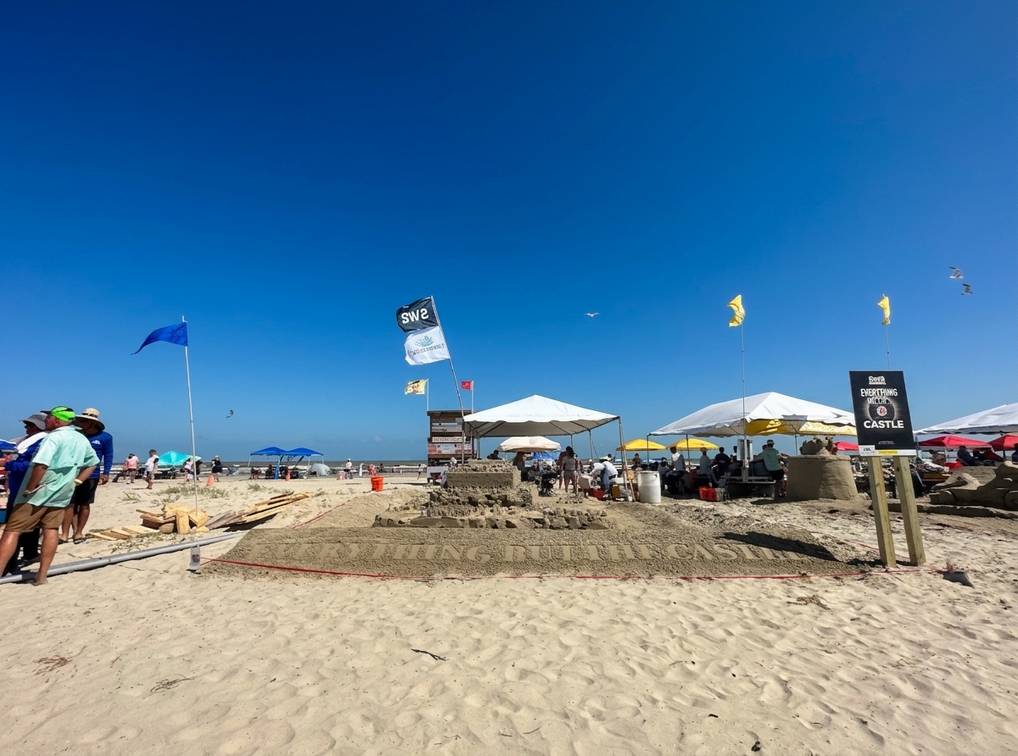
Stewart Beach anchors the east end of the seawall and is a family-first beach with a pavilion, umbrella and chair rentals, showers, changing rooms, and a playground. It falls squarely inside the Park Board’s nightly grooming rotation, so mornings are the ideal time to arrive. Locals with kids often make Stewart Beach a first stop because you can rinse off, change, and walk right back to the car.
- Rating: 4.2 stars (297 reviews)
- Address: 201 Seawall Blvd, Galveston, TX 77550
- Phone: (409) 797-5189
- Good to know: Umbrella and chair rentals available on site. Arrive by 10 AM for the calmest crowds.
View Stewart Beach on Google Maps
Babe’s Beach (Seawall between 61st and 81st)
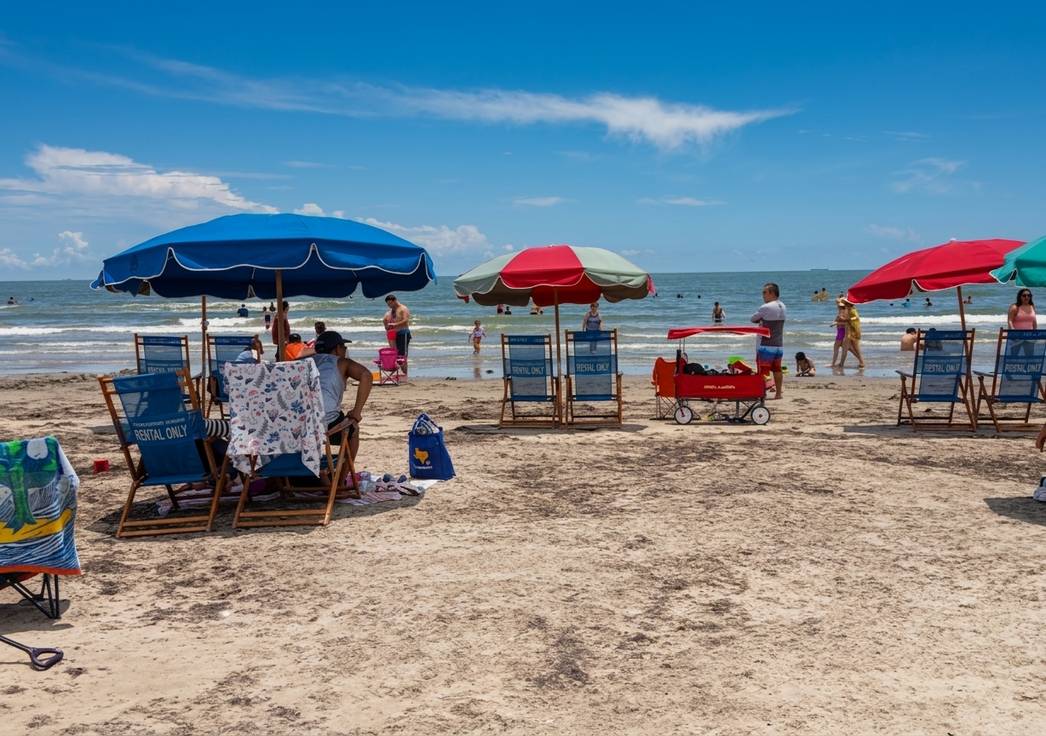
Babe’s Beach is the wide, re-nourished stretch that runs along the seawall roughly from 61st Street to 81st Street. It was engineered specifically to expand Galveston’s usable beach frontage, and its width means seaweed piles feel less overwhelming even during heavier landings. Because it is a Park Board managed section, crews groom it nightly through the sargassum season.
- Rating: 4.6 stars (304 reviews)
- Address: 7499-7295 FM3005, Galveston, TX 77551
- Good to know: Excellent for shelling and one of the best spots on the island for finding shark’s teeth.
View Babe’s Beach on Google Maps
Galveston Seawall Beaches (10th to 61st Street)
The urban seawall beaches from 10th to 61st are the classic Galveston postcard: 10 miles of walkable seawall, palm trees, and pockets of sand between rock groins. These sections are part of the Park Board’s CZM program, and the nightly push-back operation focuses on them specifically because they see the highest foot traffic. Even during heavy days, a walk of a few blocks in either direction usually finds a stretch where the sargassum has been pushed to the base of the seawall and the waterline is open.
- Rating: 4.7 stars (3,040 reviews)
- Address: 1402 Seawall Blvd, Galveston, TX 77550
- Hours: Open 24 hours
- Phone: (409) 797-5198
- Good to know: Paid parking is enforced along most of the seawall. Check the Seawall Paid Parking site before you arrive.
View Galveston Seawall on Google Maps
Where Locals Go When the Gulf Is Loaded With Seaweed
On the heaviest sargassum days, plenty of locals simply skip the Gulf side of the island and head to the bay side or to natural areas where the beach experience is not really about a groomed shoreline in the first place. These spots let you keep the day on the water without fighting through mats of weed.
Seawolf Park (Pelican Island)
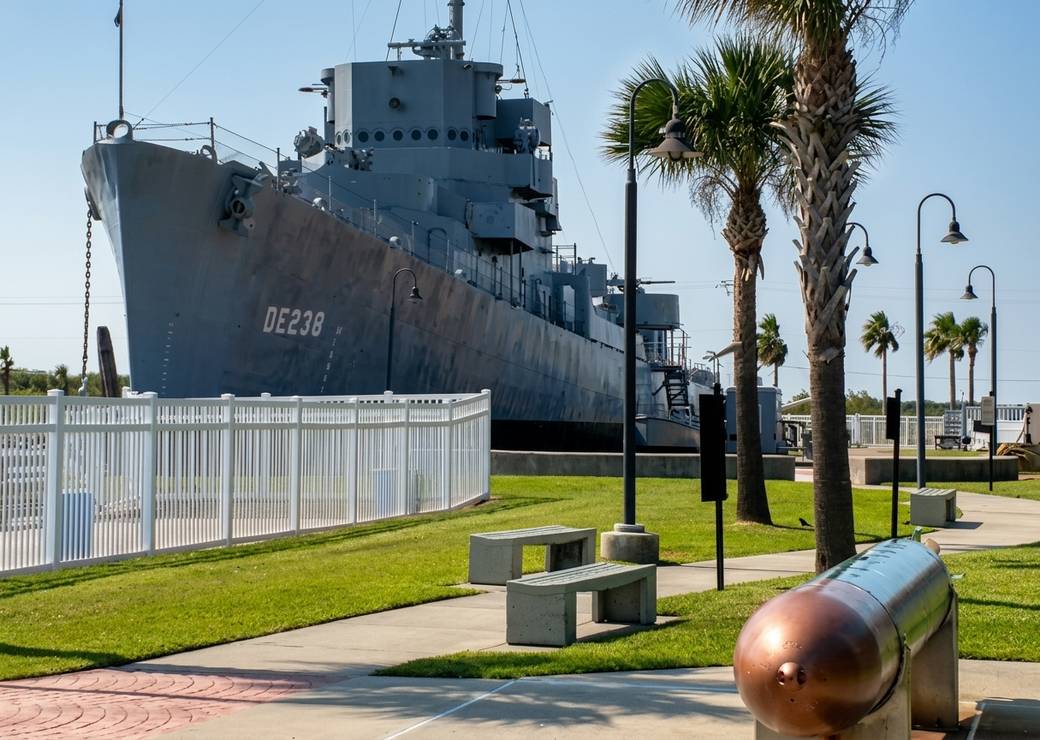
Seawolf Park sits on Pelican Island, tucked into the ship channel side of Galveston. There is no surf beach here, but you get shaded pavilions, a long fishing pier, a WWII submarine and destroyer escort you can tour, and constant boat and dolphin traffic to watch. On a heavy sargassum weekend, this is where locals bring visiting family who want to be on the water without dealing with piles of weed.
- Rating: 4.4 stars (3,981 reviews)
- Address: 100 Seawolf Park Blvd, Galveston, TX 77550
- Hours: Open 24 hours
- Phone: (409) 797-5114
- Good to know: Fishing is allowed. Bring cash for the entrance fee.
View Seawolf Park on Google Maps
Galveston Island State Park
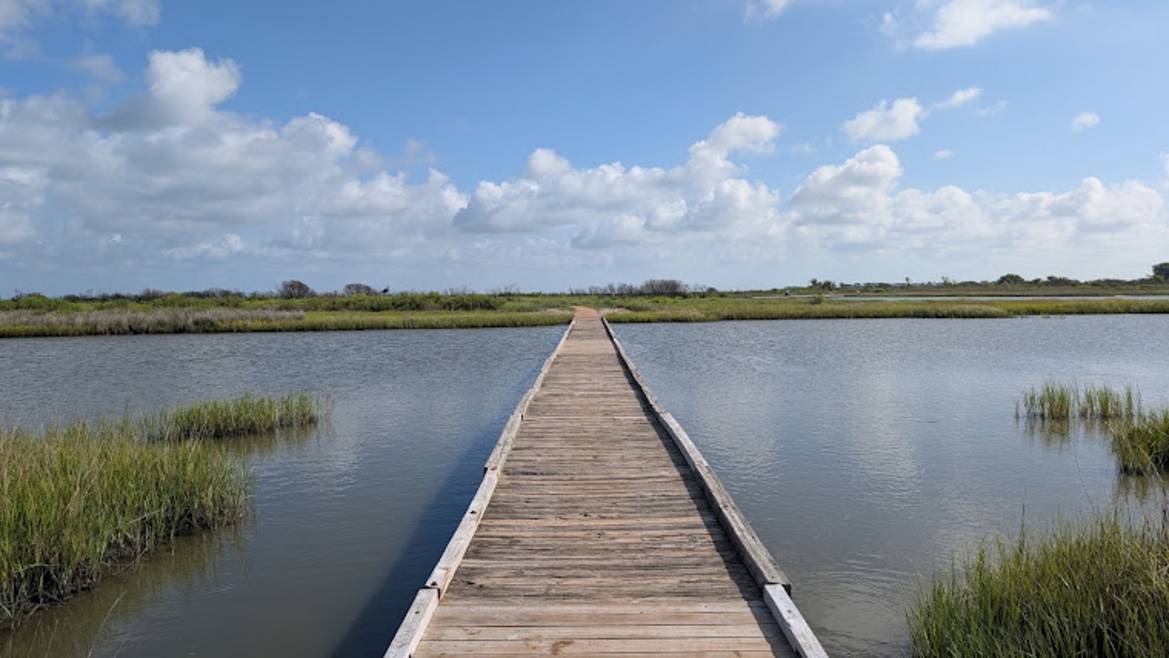
The State Park stretches across both the Gulf and the bay side of the West End. The Gulf side is intentionally left in a natural state (meaning seaweed stays where it lands as part of the ecosystem), but the bay side offers paddling trails, wade fishing, and quiet marshland with essentially no sargassum concern. If the Gulf is caked in mats, this is the place to launch a kayak or spend the afternoon birding.
- Rating: 4.6 stars (4,156 reviews)
- Address: 14901 FM3005, Galveston, TX 77554
- Hours: 7 AM to 10 PM daily
- Phone: (409) 737-1222
- Good to know: Reservations recommended for peak weekends. Trails, wade fishing, and paddling on the bay side.
View Galveston Island State Park on Google Maps
How Locals Actually Check Seaweed Conditions Before Leaving Home
Nobody who lives on Galveston Island drives down blind during June and July. There is enough live information available now that a 5-minute check before you leave the house tells you exactly what you are walking into.
- Live beach cameras. The Babe’s Beach webcam and other streaming cams show current sargassum accumulation and water clarity in real time.
- SaltWater Recon. A community-driven site that posts up-to-date video and condition reports for stretches along the seawall and the West End.
- Sargassum Early Advisory System. Uses satellite imagery to track large rafts offshore and gives a rough window for when big landings are likely to hit the coast.
- Galveston Beach Info and the Galveston Island Beach Patrol. Post condition, surf, and weather advisories daily.
- Ask a lifeguard. Once you are on the island, walking up to a lifeguard tower and asking which stretch is in the best shape that morning is the single fastest way to save your day.
If a camera shows a thick continuous mat across the beach you were planning to visit, just pick another one. The island is 27 miles long and conditions can change dramatically over a 10-minute drive.
Practical On-the-Beach Tips From Locals
Once you are on the sand, a few small adjustments turn a “there is seaweed here” day into a normal Galveston beach day.
- Go early or late. Park Board crews finish overnight grooming around sunrise, so 7 to 10 AM is peak clean-sand time on managed beaches. Late afternoon into golden hour is the second best window because crowds thin and the light is unbeatable.
- Bring water shoes. Sargassum decomposes on the beach and can hide small crabs and jellyfish fragments. Water shoes let you walk through piles without worrying.
- Set up on the seawall side of the pile. Instead of trying to camp between the sargassum band and the water, put your chairs on the dry sand side and walk across to swim. You get shade from the pile and a clean base for your gear.
- Skip low tide if you can. Piles look and smell worse when they are exposed and drying. A rising tide keeps the sargassum wet and less pungent.
- Treat it as an ecosystem, not a mess. Little crabs, coquina clams, and small fish live inside sargassum mats. Kids love hunting for them with a small net.
- Rinse gear at the beach shower. Every managed beach on this guide has outdoor rinse stations. Use them before you get back in the car.
Plan Your Galveston Trip With BeachBox
Seaweed season is part of the rhythm of the Texas Gulf Coast, not a reason to skip it. With the right beach, the right timing, and the right rental, you get exactly the Galveston vacation you pictured, sargassum or not.
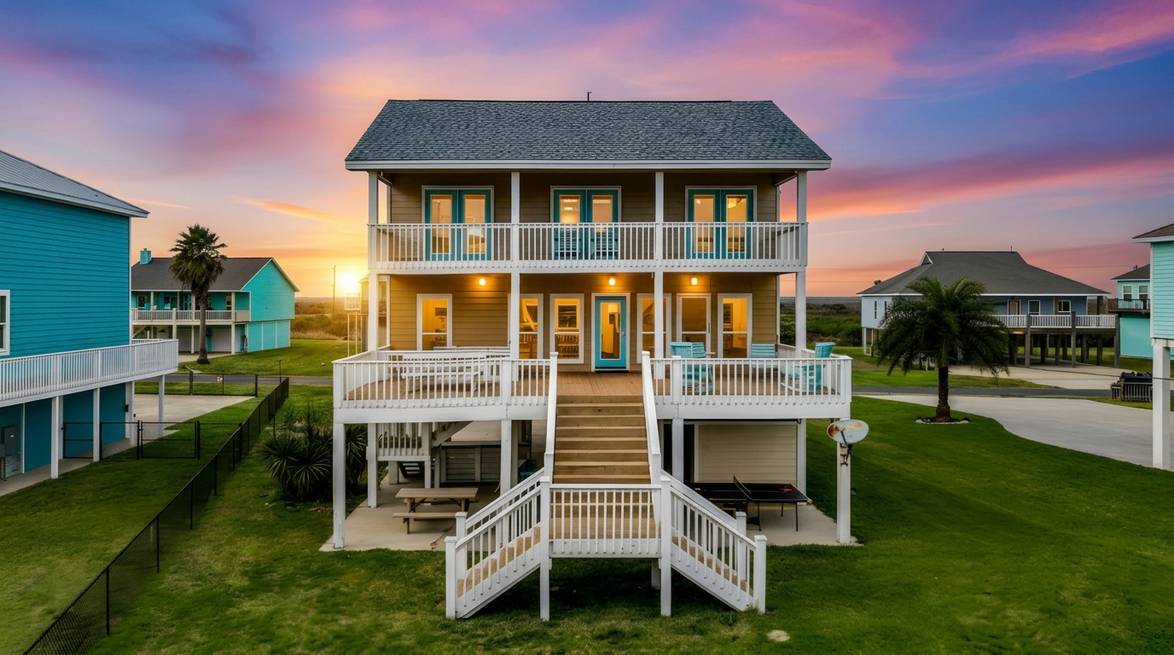
Explore our full collection of Galveston and Texas Gulf Coast vacation rentals and see why more than 50,000 stays have started here. Whether you want beachfront vacation rentals, bayfront homes, or a quiet escape on Lake Livingston, we will provide the setting. You bring the people.
Frequently Asked Questions About Galveston Seaweed Season
What month is Galveston seaweed the worst?
Sargassum landings on Galveston are heaviest in June and early July. May and late July can also see significant accumulation, and April sometimes produces an early peak driven by the local northwest Gulf source.
Is Galveston seaweed dangerous?
No. The Galveston Island Park Board and Beach Patrol confirm that sargassum is a nuisance, not a health hazard. It can smell as it decays and it hides small creatures like tiny crabs, but it is safe to walk near and swim around.
Which Galveston beaches have the least seaweed?
Park Board Coastal Zone Management beaches get nightly grooming during season and typically have the clearest sand: East Beach, Stewart Beach, Babe’s Beach, the Seawall beaches from 10th to 61st, Dellanera RV Park, and Seawolf Park. Natural areas like Galveston Island State Park and much of the undeveloped West End leave sargassum in place.
Why does Galveston leave seaweed on the beach instead of removing it?
County rules only require removal when a sargassum band is at least 8 feet wide and 6 inches high perpendicular to the shoreline. Below that, crews push the seaweed toward the dune line, where it decomposes and helps rebuild dunes that protect the island from erosion.
When is the best time to visit Galveston to avoid seaweed entirely?
September through April is effectively seaweed-free. Fall is one of the best times to visit the island: warm Gulf water, fewer crowds, and clean beaches. Spring break in March also typically beats the main landings.
Can I still swim during Galveston seaweed season?
Yes. Sargassum floats and piles at the waterline, but the water beyond the surf zone is open. Wade past the visible band and you are in clear Gulf water. Water shoes make the walk through the pile much more comfortable.


